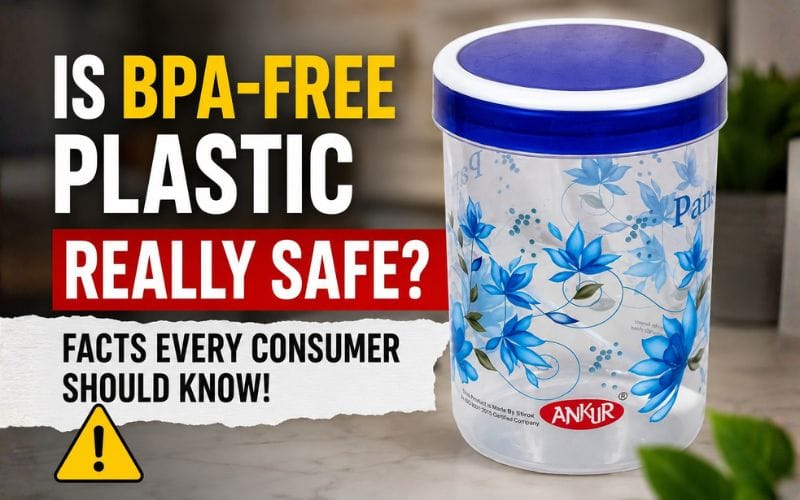
If you’ve bought a water bottle, lunch box, or food container recently, chances are you’ve seen the label “BPA-Free.” It sounds reassuring, but does BPA-free automatically mean safe?
The short answer: Generally yes, but it depends on the material, quality, and how the product is used.
Let’s understand what BPA-free really means and separate facts from myths.
What is BPA?
Bisphenol A (BPA) is a chemical used in certain plastics to make them strong, transparent, and durable. It was commonly found in:
- Food containers
- Reusable water bottles
- Plastic storage products
- Can linings
Concerns grew when studies suggested BPA could migrate into food and beverages, especially when exposed to heat.
According to the U.S. Food & Drug Administration (FDA), BPA exposure mainly occurs through food-contact materials.
Why Did BPA Become a Concern?
BPA gained attention because it may act like a hormone in the body, which raised questions about possible effects on health.
Research has explored links between BPA exposure and:
- Hormonal imbalance
- Developmental concerns
- Reproductive health issues
However, findings in humans remain mixed, and Scientific and regulatory bodies continue to evaluate long-term exposure data. .
Learn more from the National Institute of Environmental Health Sciences (NIEHS)
BPA-Free Plastic: Myths vs Facts
Myth 1: BPA-Free Means Completely Safe
Fact: Safety depends on material quality, manufacturing standards, and usage — not just the label.
Myth 2: All Plastics Contain BPA
Fact: Many plastics, including PET (#1), LDPE (#4), Polypropylene (#5) and HDPE (#2), are naturally BPA-free.
Myth 3: BPA-Free Plastic Can Be Heated Without Worry
Fact: Excessive heat can still damage plastic. Always use microwave-safe, food-grade containers and avoid cracked or worn-out products.
So, Is BPA-Free Plastic Safe?
Yes, when you choose quality products and use them correctly.
Most food-grade BPA-free plastics approved by regulatory authorities are considered safe for normal use.
But smart usage matters.
Choose safer plastics:
✔ #5 Polypropylene (PP)
✔ #2 HDPE
#1 PET
#4 LDPE
✔ Food-grade certified materials
This applies to virgin material. It can not be confirmed in case of recycled plastics, even if they are of above codes.
Avoid:
✘ Poor-quality unlabeled plastics
✘ Overheating plastic unnecessarily
✘ Using damaged containers repeatedly
The European Food Safety Authority (EFSA) continues to review BPA-related safety evidence.
The term “BPA-Free” is a good sign, but it shouldn’t be the only thing you check.
When choosing plastic products, focus on:
- Material quality
- Food-grade certification
- Safe usage habits
Because in the end, plastic safety is about informed choices, not just labels.
At Ankurwares, all food-contact products are manufactured using high-quality virgin raw materials such as Polypropylene (#5) and approved food-grade plastics that are naturally BPA-free. Our plastic kitchen containers, food storage containers, lunch boxes, and other food-contact products are designed for safe everyday use in Indian homes. By avoiding recycled material in food-contact applications, Ankurwares ensures better quality consistency, hygiene, durability, and consumer safety standards.
Disclaimer:
The information shared in this article is for educational purposes only and is based on publicly available research and regulatory sources. Safety and suitability of plastic products may vary by material, quality, usage, and manufacturer standards. Readers are encouraged to refer to product guidelines and certified safety standards before use.