Understanding What You’re Really Paying For
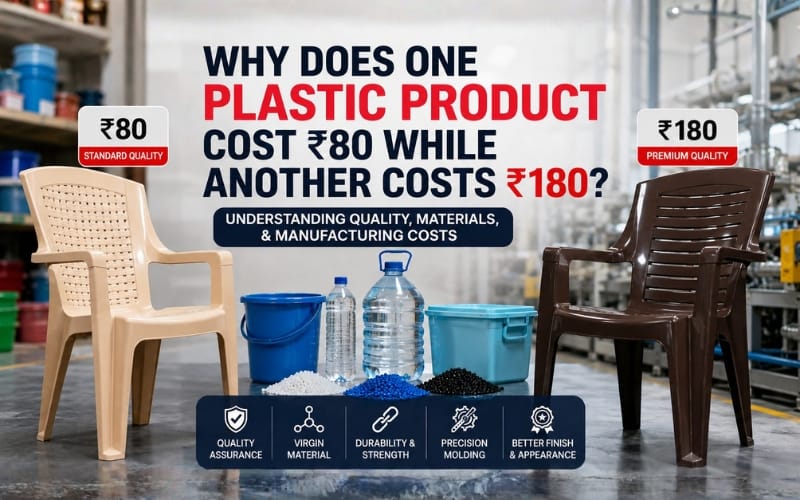
Have you ever compared two plastic products, lunch boxes, water bottles, or storage products that looked almost identical, yet noticed a significant difference in price?
It’s a common question among consumers:
“If both products serve the same purpose, why is one much more expensive than the other?”
The answer lies in what you can’t see at first glance.
While two products may appear similar in design and functionality, the materials, manufacturing processes, safety standards, durability, and quality controls behind them can vary significantly. Understanding these differences can help consumers make informed purchasing decisions and identify products that offer genuine long-term value.
The Hidden Factors Behind Plastic Product Pricing
The price of a plastic product is influenced by much more than its appearance.
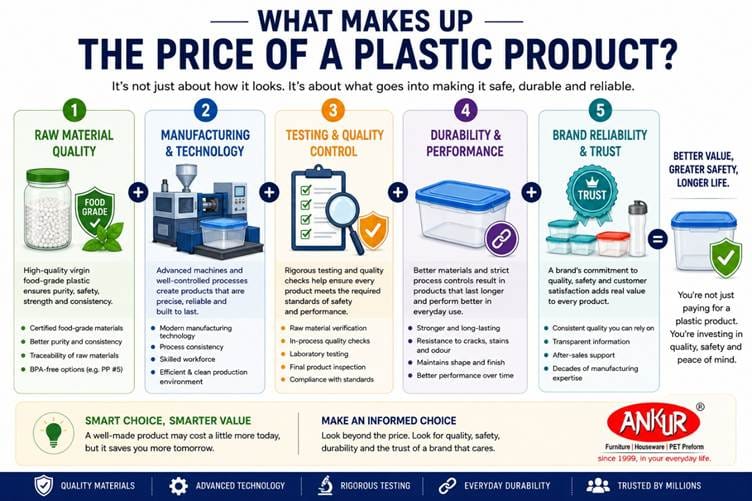
Several important factors contribute to the final cost, including:
- Quality of raw materials
- Manufacturing technology and processes
- Food-grade certifications and compliance
- Product durability and lifespan
- Quality control and testing systems
- Design and engineering standards
- Brand commitment to consistency and safety
A lower-priced product may seem like a better deal initially, but the true value of a product is often determined by its performance, safety, reliability, and longevity over time.
Raw Material Quality Makes a Significant Difference
One of the biggest contributors to product pricing is the type and quality of plastic used during manufacturing.
Manufacturers may choose from:
- Virgin food-grade plastic materials
- Recycled or reprocessed materials
- Different grades of polymers
- Varying levels of material purity and consistency
Products manufactured using high-quality virgin raw materials generally offer better consistency, improved appearance, enhanced durability, and more reliable long-term performance.
In food-contact applications, raw material quality becomes especially important because it directly impacts product reliability and consumer confidence.
Why Material Traceability Matters
When purchasing products intended for food storage or food contact, the quality and traceability of the material become important considerations.
Food-grade plastics are manufactured using approved materials and are subject to stricter quality controls designed for their intended use. Manufacturers often invest in certified raw materials, controlled production processes, and quality assurance systems to maintain consistency and compliance.
As a result, products manufactured using certified food-grade materials may cost more than products produced without the same level of material traceability or quality assurance.
When purchasing kitchen storage containers, lunch boxes, water bottles, or food-contact products, material quality should always be a priority.
The Role of Recycled Plastics
It is important to note that recycled plastics play a valuable role in sustainability and resource conservation.
Advances in recycling technology have enabled manufacturers to produce high-quality recycled materials suitable for many applications. The quality of recycled plastics depends on factors such as source material, sorting processes, contamination control, recycling technology, traceability, and intended end use.
Not all recycled plastic products are inferior, and many perform exceptionally well in applications such as furniture, utility products, storage solutions, industrial products, and various consumer goods.
However, the suitability of any recycled material depends on the standards followed during processing and manufacturing. For food-contact applications, material quality, traceability, and compliance with applicable standards become particularly important considerations.
The suitability of any plastic material—whether virgin or recycled—depends on its intended use and the quality systems adopted by the manufacturer.
Why Durability Affects Product Cost
Have you ever purchased a low-cost container only to find that it cracked, warped, lost its shape, or became unusable after a short period?
Durability is rarely accidental.
It is often the result of:
- Better raw materials
- Stronger product design
- Advanced manufacturing processes
- Consistent quality testing
- Higher production standards
Investing in these areas increases manufacturing costs but also helps create products that perform reliably over time.
A durable product often delivers better value than a cheaper alternative that requires frequent replacement.
Quality Control and Testing: The Invisible Investment
Consumers may not always be able to identify material quality simply by appearance.
While some lower-quality products may exhibit inconsistent colour, finish, odour, or strength, appearance alone is not a reliable indicator of quality. The quality of raw materials, manufacturing processes, and quality control systems ultimately determine product performance and durability.
One of the least visible—but most important—factors affecting product pricing is the extent of testing and quality assurance carried out during manufacturing.
Reputable manufacturers often invest significantly in:
- Raw material verification
- Laboratory testing
- Product inspections
- Process monitoring
- Manufacturing consistency checks
- Performance validation
- Safety compliance systems
These measures help ensure that products consistently meet expected quality and performance standards before reaching consumers.
The level of testing and quality assurance can vary significantly across manufacturers. Such investments add to manufacturing costs but help improve consistency, reliability, safety, and customer satisfaction.
The True Cost of a Cheap Product
When evaluating products based solely on price, it can be easy to overlook long-term costs.
A lower-priced product may result in:
- Reduced lifespan
- Frequent replacements
- Inconsistent performance
- Lower durability
- Poorer user experience
On the other hand, a well-manufactured product may have a higher upfront cost but offer better performance, greater reliability, and longer service life.
This is why many consumers today are shifting their focus from simply buying the cheapest option to seeking the best value for money.
Tips to Identify a Good-Quality Plastic Product
Before making a purchase, consider the following:
1. Check for Food-Grade Information
Look for food-grade markings, certifications, or manufacturer declarations where applicable.
2. Buy From Reputable Brands
Established brands generally maintain stricter quality controls, consistency standards, and accountability.
3. Examine Product Finish
A good-quality product usually has a smooth finish, uniform colour, and no sharp edges or visible manufacturing defects.
4. Check Product Strength
The product should feel sturdy and well-designed for its intended purpose.
5. Look for Material Information
Responsible manufacturers often disclose material types such as Polypropylene (PP), HDPE, or other approved materials.
6. Avoid Unlabelled Products
Products with no manufacturer details, material information, or usage instructions may offer less transparency regarding quality standards.
7. Consider Long-Term Value
A product that lasts longer and performs consistently often provides better value than a cheaper product requiring frequent replacement.
Making an Informed Choice
The next time you notice a significant price difference between two seemingly similar plastic products, remember that appearance tells only part of the story.
Behind every product lies a combination of material quality, manufacturing expertise, safety standards, quality control systems, testing procedures, and long-term performance considerations that ultimately determine its value.
The smartest purchase is not always the cheapest product—it is the product that offers the best balance of quality, durability, safety, reliability, and long-term value.
The Ankur Commitment to Quality
At Jagdamba Polymers Limited, the company behind the trusted Ankur brand, quality begins at the source.
Our food-contact products are manufactured using carefully selected high-quality virgin raw materials and approved food-grade plastics, including Polypropylene (PP #5), which is naturally BPA-free.
All food-grade virgin materials used in our manufacturing process are supported by food-grade certifications provided by the raw material manufacturers.
Jagdamba Polymers procures its raw materials from globally reputed polymer manufacturers and authorized suppliers to ensure consistency, traceability, and quality.
Every Ankur product is designed with a focus on:
- Virgin food-grade plastic materials
- Material consistency
- Everyday durability
- Hygienic storage solutions
- Reliable performance for daily use
Our manufacturing processes emphasize stringent quality checks, process controls, and consistency standards to ensure that the products reaching consumers deliver the performance, safety, and reliability they expect.
Because when it comes to products used every day by families, schools, workplaces, and households, true value is not determined by price alone—it is defined by quality, durability, safety, and the confidence that comes with choosing a trusted brand.
With Ankur, consumers are not simply purchasing a plastic product; they are choosing a solution built on decades of manufacturing expertise, quality-focused processes, and a commitment to delivering dependable products for everyday life.
Frequently Asked Questions (FAQs)
1. Why are similar plastic products priced differently?
The price difference usually comes from factors such as raw material quality, manufacturing standards, durability, safety certifications, testing procedures, and quality control systems.
2. Does a higher price always mean better quality?
Not necessarily. However, products manufactured using better materials and stricter quality standards often provide better durability, consistency, safety, and long-term value.
3. What should I check before buying a plastic food container?
Look for food-grade certification, material information, product durability, brand reputation, and suitability for your intended use.
4. What is food-grade plastic?
Food-grade plastic is manufactured using materials approved for safe contact with food and beverages under specified conditions of use.
5. Why is raw material quality important?
Higher-quality raw materials help improve product strength, durability, appearance, consistency, and overall performance.
6. Are all recycled plastic products of poor quality?
No. Many recycled plastic products perform exceptionally well in appropriate applications. Product quality depends on the source material, processing technology, manufacturing standards, quality controls, and intended use.
7. How can I identify a good-quality plastic product?
Check for food-grade markings, product finish, durability, brand reputation, and clear information about the materials used.
8. Is the cheapest product always the best value?
Not always. A product that lasts longer and performs better may offer greater value over time, even if its initial purchase price is higher.
9. Does a heavier plastic product always mean better quality?
Not necessarily. Product quality depends on material selection, design, manufacturing standards, and intended use. Weight alone is not a reliable indicator of quality.
10. Why choose Ankur products?
Ankur products are manufactured by Jagdamba Polymers Limited using high-quality virgin raw materials and approved food-grade plastics, with a focus on safety, durability, consistency, and everyday reliability.
Disclaimer
The information shared in this article is for educational purposes only and is based on general industry practices and publicly available information. Product performance, safety, and suitability may vary depending on material selection, manufacturing processes, intended use, and applicable standards. Consumers are encouraged to follow product instructions and purchase products from reputable manufacturers that provide transparent information regarding materials and usage.